DHI Hair Transplant

DHI HAIR TRANSPLANT

DHI HAIR TRANSPLANT

Direct Hair Implantation (DHI)

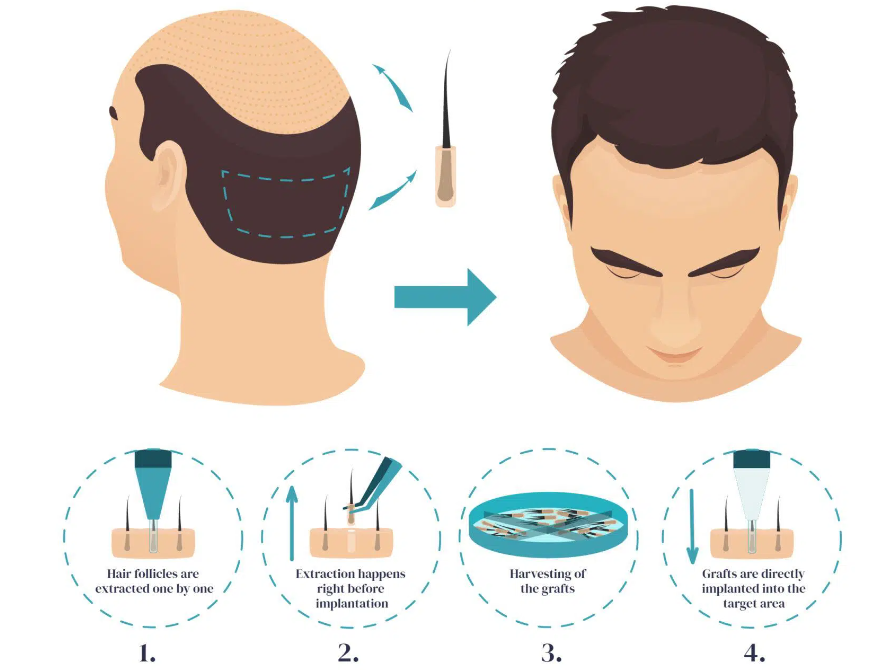
MEDANA's DHI hair transplant is a method of hair restoration where hair follicles are taken from the donor region and implanted into the recipient area without requiring incisions or stitches. This technique utilizes a specialized instrument known as a Choi pen, enabling precise control over the depth, angle, and direction of the implanted hair.
Direct Hair Implantation offers a variety of benefits, including the following:
➢ Quicker and less painful recovery due to minimally invasive technique
➢ Precise control over the depth, angle, and direction of implanted hair, leading to natural-looking results
➢ With no incisions or stitches required, the healing time for DHI is typically shorter
➢ The Choi pen used in DHI ensures a high graft survival rate
➢ Doesn't involve traditional strip harvesting or linear incisions, there is minimal scarring DHI may be the right choice for people who need to treat a larger area of thinning or hair loss. The surgeon removes a strip of tissue at one time from the donor area, containing all of the follicles to be transplanted, which can result in better-quality grafts.
LET’S GET YOUR HAIR BACK

Our team of experienced consultants are here to help you, fill in your details and we can start talking about your treatments.

What is DHI Techniques?

How is DHI Hair Transplant Technique Applied?

The Direct Hair Implantation (DHI) procedure is an advanced hair transplant technique that involves several precise steps. Here's a concise overview of how the DHI hair transplantation procedure works:

1. Consultation:

The process begins with a comprehensive consultation between the patient and the DHI specialist. The surgeon assesses the patient's hair loss pattern, discusses expectations, and determines the suitability for DHI based on various factors.

2. Donor Area Preparation:

Before the extraction process, the donor area (usually the back or sides of the scalp) is trimmed to provide easy access to individual hair follicles.

3. Local Anesthesia:

Local anesthesia is administered to both the donor and recipient areas to ensure the patient is comfortable throughout the procedure.

4. Follicular Unit Extraction (FUE):

Using a specialized tool called the Choi Implanter Pen, individual hair follicles are extracted directly from the donor area. The Choi Implanter Pen allows for precise control over the depth, angle, and direction of follicle extraction.

5. Graft Inspection and Preparation:

The extracted follicles are carefully examined and prepared for implantation. The Choi Implanter Pen minimizes the time the follicles spend outside the body, enhancing their chances of successful transplantation.

6. Recipient Site Creation:

The surgeon uses the Choi Implanter Pen to create tiny, precise incisions in the recipient area, eliminating the need for pre-made incisions or channels.

7. Direct Implantation:

The prepared follicles are directly implanted into the recipient sites using the Choi Implanter Pen. This ensures a more natural distribution and alignment of the transplanted hair.

What is DHI Techniques?

Direct Hair Implantation (DHI) is an advanced hair restoration technique characterized by meticulous individual follicular extraction from the donor area, typically located at the occipital scalp. In contrast to traditional strip extraction, DHI employs specialized tools to minimize donor site morbidity. The harvested follicles undergo stringent quality control measures to ensure viability.

DHI's distinctiveness lies in its recipient site preparation, facilitated by a Choi implanter pen. This precision instrument enables direct implantation of follicles, determining depth, angle, and direction for a natural hairline. Beyond technical prowess, DHI emphasizes aesthetic principles, aiming for seamless integration of transplanted follicles with existing hair, achieving both scientific robustness and artistic refinement in hair restoration.

How is DHI Hair Transplant Technique Applied?

The Direct Hair Implantation (DHI) procedure is an advanced hair transplant technique that involves several precise steps. Here's a concise overview of how the DHI hair transplantation procedure works:

1. Consultation:

The process begins with a comprehensive consultation between the patient and the DHI specialist. The surgeon assesses the patient's hair loss pattern, discusses expectations, and determines the suitability for DHI based on various factors.

2. Donor Area Preparation:

Before the extraction process, the donor area (usually the back or sides of the scalp) is trimmed to provide easy access to individual hair follicles.

3. Local Anesthesia:

Local anesthesia is administered to both the donor and recipient areas to ensure the patient is comfortable throughout the procedure.

4. Follicular Unit Extraction (FUE):

Using a specialized tool called the Choi Implanter Pen, individual hair follicles are extracted directly from the donor area. The Choi Implanter Pen allows for precise control over the depth, angle, and direction of follicle extraction.

5. Graft Inspection and Preparation:

The extracted follicles are carefully examined and prepared for implantation. The Choi Implanter Pen minimizes the time the follicles spend outside the body, enhancing their chances of successful transplantation.

6. Recipient Site Creation:

The surgeon uses the Choi Implanter Pen to create tiny, precise incisions in the recipient area, eliminating the need for pre-made incisions or channels.

7. Direct Implantation:

The prepared follicles are directly implanted into the recipient sites using the Choi Implanter Pen. This ensures a more natural distribution and alignment of the transplanted hair.

We're here to guide you, Schedule your free consultation.

Advantages of DHI hair transplants

  1. Precision and Natural Results: The Choi Implanter Pen ensures accurate implantation, creating a natural-looking hairline.
  2. Minimally Invasive Technique: DHI is minimally invasive, promoting faster healing and reduced post-operative discomfort.
  3. No Visible Scarring: Enjoy the aesthetic benefits without worrying about visible scars, ideal for those who prefer shorter hairstyles.
  4. Reduced Infection Risk: Direct implantation minimizes the risk of infection, ensuring a safe and clean transplant process.
  5. Adaptable for Various Hair Types: Suitable for different hair textures, including curly and coarse hair.
  6. Faster Recovery: Patients can resume normal activities sooner, thanks to the efficient and gentle nature of DHI.
  7. Customized Hairline Design: The precision of DHI allows for tailored and natural-looking hairline designs.
The DHI procedure stands out for its precision, minimal invasiveness, and ability to achieve natural-looking results. Patients interested in DHI should consult with a qualified and experienced DHI specialist to discuss their specific needs and expectations.

Request your free consultation with our expert team

Elevate your hair restoration journey. Request a consultation with our experts at Medana Clinic. Precision, professionalism, and personalized solutions await. Schedule your free consultation today

[vc_row][vc_column]


    [/vc_column][/vc_row]

    FAQ About DHI Hair Transplant

    1What is DHI, and how does it differ from other hair transplant methods?
    DHI, or Direct Hair Implantation, is a modern hair transplantation technique that differs from other methods such as FUE (Follicular Unit Extraction) or FUT (Follicular Unit Transplantation). Unlike traditional procedures, DHI involves directly implanting hair follicles from the donor area to the recipient area without the need for prior channel creation. This means there are no incisions or slits made before implantation, offering advantages such as minimal handling of grafts, reduced risk of damage, faster healing, and no visible scarring
    2Is the DHI technique suitable for both men and women?
    Yes, DHI is a versatile technique that can be used for both male and female pattern hair loss. The suitability for an individual depends on various factors, and a consultation with a qualified DHI specialist is crucial to determine the best course of action
    3Who is an ideal candidate for DHI, and what factors determine the success of the procedure?
    An ideal candidate for DHI should exhibit stable hair loss, good overall health, and realistic expectations. The success of the procedure relies on factors like the surgeon's expertise, quality of donor hair, and the patient's health. A comprehensive consultation with a qualified specialist is crucial to assess candidacy and address concerns. In essence, stable health, ample donor hair, and realistic expectations define the ideal candidate, with success tied to surgical expertise and overall patient health.
    4What is the recovery process like after undergoing DHI, and when can one expect to see the final results?
    The recovery process post-DHI involves a quick return to light activities within days, with noticeable initial growth after a few weeks. Full results, however, take several months as transplanted hair undergoes its natural growth cycle. Adhering to post-operative care instructions and regular follow-ups with the surgeon are crucial for optimal healing and outcomes
    5Are the results of DHI permanent, and is there any maintenance required?
    The permanence of DHI results stems from the genetic resistance of transplanted hair to loss. Routine hair care suffices for maintenance, but it's crucial to acknowledge the potential natural loss in non-transplanted hair over time. Adhering to precise post-operative instructions is paramount, and ongoing monitoring through regular follow-up appointments ensures the enduring health of the transplanted hair.

    Contact Our Medical Team Today